Amid the manufacturing industry’s shift to intelligence and efficiency, cutting – a core production process – relies on technological upgrades to determine product quality and market competitiveness. The fiber laser cutting machine, with precision, efficiency, and flexibility, has replaced flame/plasma cutting, becoming a “cutting-edge tool” in mechanical manufacturing, automotive, and new energy sectors, boosting both production efficiency and product precision across industries.
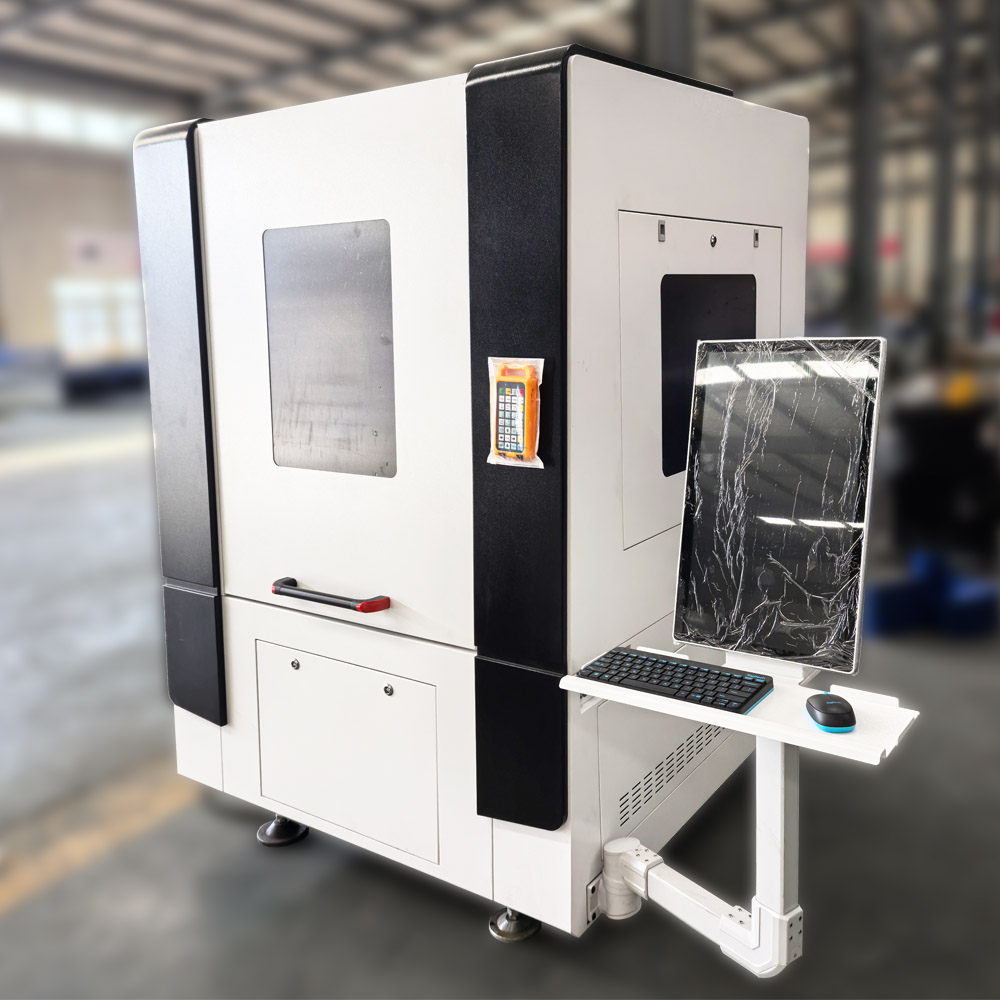
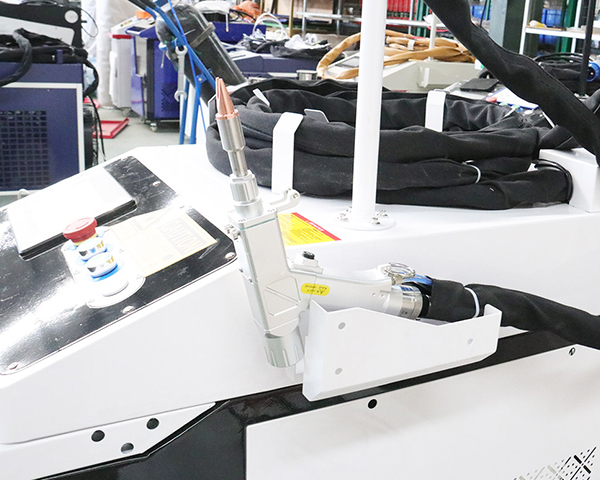
Taking fiber laser as its core light source, the fiber laser cutting machine achieves rapid melting, vaporization, or ablation by focusing high-energy laser beams on the material surface, thereby completing high-precision cutting operations. Compared with traditional cutting equipment, its technical advantages are particularly prominent: in terms of cutting precision, the positioning error can be controlled within ±0.03mm, enabling it to accurately reproduce complex design drawings, meet the processing needs of precision components, and ensure smooth, burr-free product edges without the need for subsequent grinding, significantly reducing process costs; in terms of cutting efficiency, for 10mm-thick carbon steel, the cutting speed can reach 3-5 times that of traditional plasma cutting, and it can realize continuous non-stop operation, effectively shortening the production cycle and helping enterprises increase production capacity.
Wide material adaptability is another major highlight of the fiber laser cutting machine. It can easily handle various metal materials such as carbon steel, stainless steel, aluminum alloy, and copper alloy, with a thickness range of 0.1mm to 30mm, excelling at both precision cutting of thin plates and efficient cutting of thick plates. Meanwhile, the equipment adopts a non-contact cutting method, which does not cause extrusion or damage to the material surface, avoiding problems such as material deformation and waste in traditional cutting processes. The material utilization rate can be increased by 15%-20%, reducing production costs for enterprises. Furthermore, the equipment generates no pollutants such as dust or waste gas during operation, with noise below 75 decibels, fully complying with environmental policy requirements and helping enterprises achieve green production transformation.
In terms of application scenarios, the versatility and professionalism of the fiber laser cutting machine meet the personalized needs of multiple industries: in the automotive manufacturing sector, it can be used for the precise cutting of car body frames and engine components, providing support for lightweight and intelligent automotive production; in the new energy industry, it is suitable for the cutting and processing of PV module frames and lithium battery casings, ensuring the stability and safety of new energy products; in the construction machinery field, it can efficiently complete the cutting of large-scale components such as steel structures and robotic arms, improving the manufacturing precision of engineering equipment; in addition, in fields like hardware products, aerospace, and medical devices, the fiber laser cutting machine also relies on its flexible cutting method to easily meet diverse needs such as complex shapes and mass production, becoming an indispensable core processing equipment across multiple industries.
With the in-depth integration of Industry 4.0 technologies, fiber laser cutting machines are iterating and upgrading toward intelligence, high power, and integration. Nowadays, mainstream equipment has integrated intelligent CNC systems, supporting functions such as direct import of CAD drawings, automatic nesting, and automatic fault diagnosis. It is easy to operate and master, reducing labor dependence. Some high-end models can also realize multi-machine linkage and unmanned production, further enhancing the level of production intelligence. Industry data shows that the global market size of fiber laser cutting machines has maintained an average annual growth rate of over 18%, and is expected to continue its high-speed growth in the next five years, becoming a core track for the technological upgrading of the manufacturing industry.
Faced with increasingly fierce market competition, choosing a high-performance fiber laser cutting machine has become a key measure for enterprises to enhance core competitiveness and seize market opportunities. It is not only the upgrade and replacement of cutting equipment, but also the innovation and upgrading of production models. In the future, fiber laser cutting machines will continue to integrate cutting-edge technologies and expand more application scenarios, providing stronger technical support for the high-quality development of the manufacturing industry, helping enterprises move forward steadily on the path of transformation and upgrading, and creating greater commercial value.